



Download Our Working Group Documents
Maine_Forest_Working_Groups_Past_Present_Future_JAN_2017
Maine_Forest_Working_Group_Jan_18_2017
MAINE FOREST LEGACY CARBON WORKING GROUPS
FOREST SOIL CARBON: PAST, PRESENT & FUTURE
A Synthesis and Plan Enabling Soil Stewardship
SIGN UP AND GET INVOLVED–OPEN TO THE PUBLIC
Students, Individuals, Communities, Landowners, University, Private and Governmental Participation Welcome
Maine Forests Are Underlain by Soil Archives of Carbon, Nutrients and Moisture. Our Efforts Will Draw On the Past and Present to Peer Into the Future of Maine’s Forests. How Can We Manage Forests to Preserve Them For Future Generations?
WG 1: Maine Forests During the Holocene. We will compile literature describing Maine’s forests spanning the Holocene from about 11,000 years ago. We will emphasize the Medieval Warm Period (AD 950-1250) and the Little Ice Age (1300-1870) with a view towards the future. Our goal will be to synthesize all available data creating a digital and publicly available knowledge database. The database will serve as a foundation for forest perspectives of the present and future. Disciplines include: Geochemistry, Biodiversity, Hydrology, Climate Change and Nutrient Cycles.
WG 2: History of Maine Forests. Maine Forests preserve a rich and diverse history of resource usage for the paper and timber industries and have been subject to extensive deforestation to accommodate urban expansion. This WG will again synthesize all available data over the pre-industrial period (~1800) to 2014. The WG will emphasize economic and ecological trends for forest resources including historical transactions for large tracts of forest land. Disciplines include: Economics, Ecology, History, Urban Studies and Archaeology.
WG 3: The Future of Maine’s Forests. The future of Maine’s forests is in the hands of current landowners, small and large, private and commercial, conserved and managed for harvest. The transition of Maine’s Forest economy from the paper industry to timber products to forest carbon products represents a living mosaic of species and biospheric interactions that are poorly understood. This WG will explore interdisciplinary and out-of-the-box thinking to link data from the three WG’s in a perspective of climate change and stewardship. Trends in forest cover, soil carbon and seal level will be mapped for specific areas with a view of data based predictions for the future in contrast to low resolution model predictions. Disciplines include: Diverse Models, Forest Management, Carbon Trading, Economics and Policy.
Sign up–send an email to:
mailto:info@pemforest.com with your WG selection, name and contact information.
WG’s will convene via Skype and in-person meetings in Maine communities as organized by each group.
WG team leaders are needed. Please indicate your interest and qualifications.
Initial WG online meetings are scheduled for January 2017, TBD. Join anytime.
WG’s will be managed by Bruno D.V. Marino, CEO, Founder of PEM Inc.


 QuantumQarbon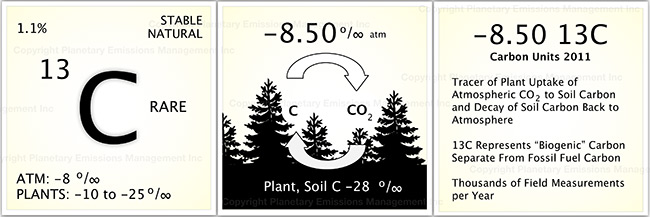
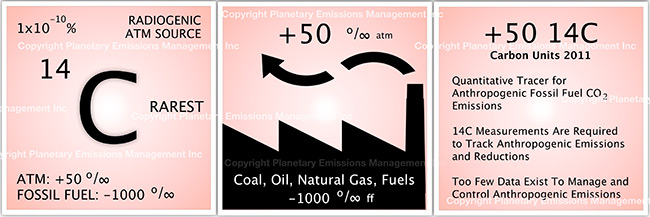
 Carbon isotopic analysis (IA)

 Working Forest Carbon Sequestration
 Eddy Covariance (EC)
 Soil Accumulation Chambers (SAC)
 Soil gas probes (SGP)
 Exsolvation of Dissolved CO2 (CO2(aqueous)) and CH4
 Vehicle Mounted Fast Response Gas Analyzers (VM)
 Unmanned Aerial Systems (UAS) and Remote Sensing (RS)
 A variety of UAS’s may be used in a project to record the status of forest conditions at low altitude (e.g., ~1,000 ft) on a routine basis, when a disturbance has occurred (e.g., hurricane, drought, timber operations) or for surveillance of forest activity by landowners or others accessing the site. Typical capabilities may include spectral imaging of the tree canopy and mapping functions to reveal differences along the flight path over time. In addition, UAS’s may also carry miniaturized gas sensors for CO2, CH4 and other atmospheric gases. The use of remote sensing (RS) for ecological research is well documented covering spectral bands for normalized difference vegetation index (NDVI), leaf evapotranspiration and other features of the biotic and abiotic project area.
 Flask Collection (FC)
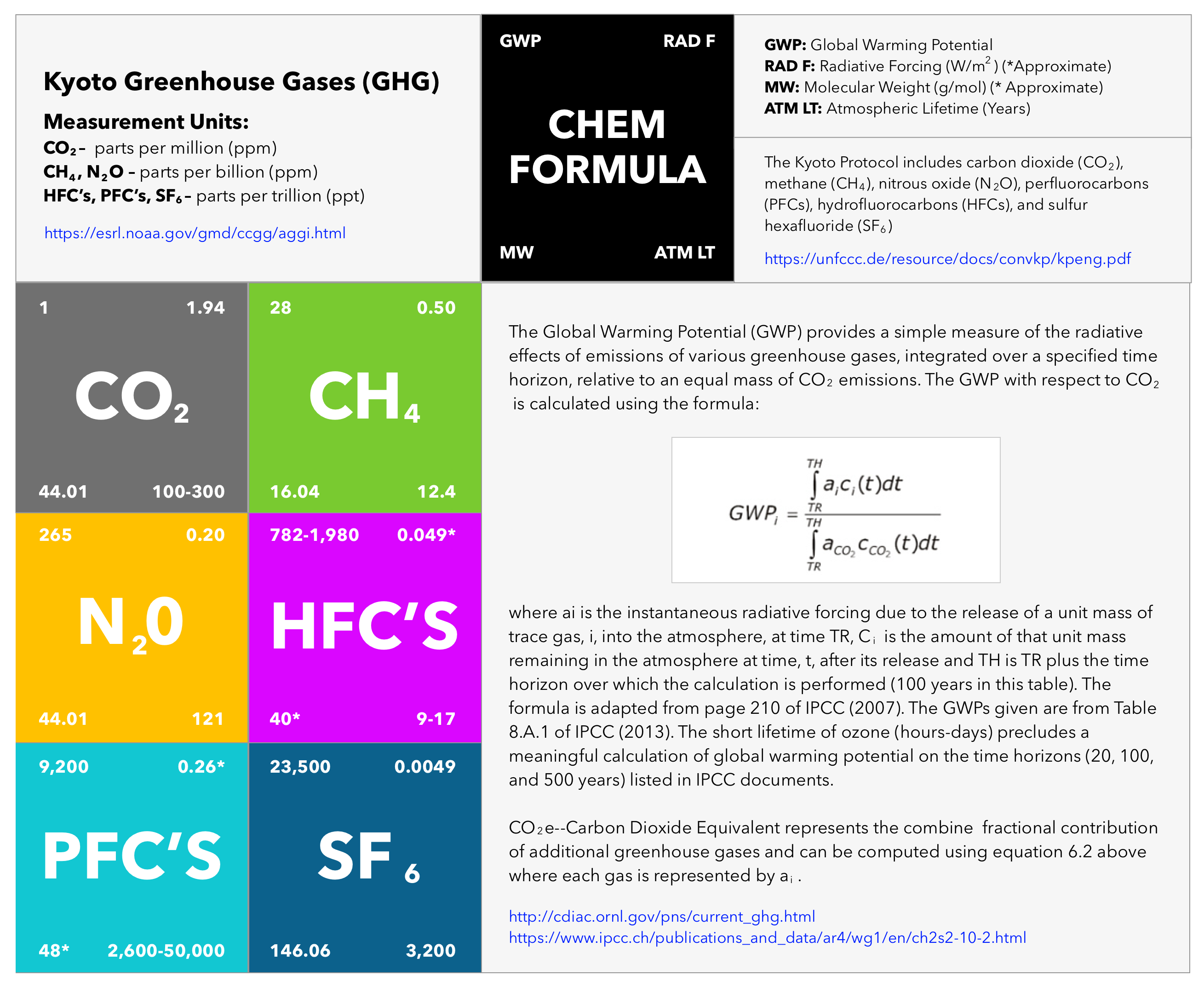
 Nitrous Oxide (N2O)
 Sulfur Hexaflouride (SF6)
 Tree Plantation
 Perfluorocarbon (PFC)